Greek Letter Phi SVG and STL Review
As a designer who spends more time than I care to admit staring at stitch density charts and fabric swatches, I approach every new file download with a mix of excitement and skepticism. When I first encountered the Greek Letter Phi SVG and STL, my immediate reaction wasn't about the format; it was about the font itself. The Playfair Display style is distinctively elegant, offering a serif aesthetic that feels timeless rather than trendy. However, the product description notes its ideal use for 3D printing and laser cutting, which immediately raises a question for an embroidery specialist: does this digital asset translate well into thread?
I decided to put the design through a real-world trial run. My goal was to create a custom embroidered patch for a boutique tote bag intended for a local craft fair. The challenge was to see if the sharp angles and fine serifs of the Greek letter would hold up under the tension of a machine or if they would dissolve into a messy blob of thread. This review isn't just about whether the file works; it is about how it performs when you are trying to build a brand identity on a physical product.
The First Stitch: Visual Personality and Mood
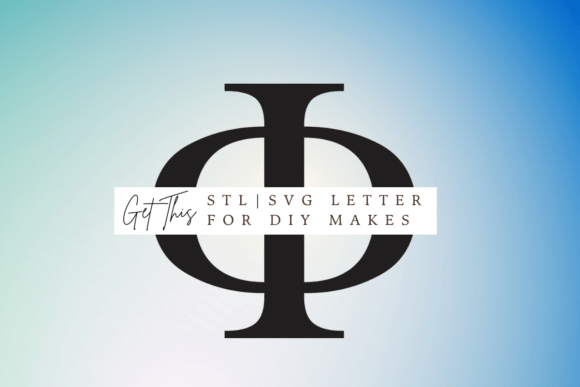
The Greek Letter Phi SVG and STL carries a specific mood. It is academic yet sophisticated, leaning heavily into a classic, editorial look. Unlike blocky sans-serif fonts that scream "modern tech," this design whispers "heritage" and "craftsmanship." For a small business owner looking to add a touch of class to their merchandise, this visual personality is a strong asset. It suggests quality and attention to detail before the customer even touches the item.
However, elegance in embroidery requires precision. The thin lines characteristic of the Playfair Display font can be tricky. In a digital mockup, those hairline serifs look crisp. But once converted to a machine embroidery design, the reality changes. The shape of the Phi creates a natural focal point, but the open spaces within the letter require careful consideration regarding fill stitches. If the stitch density is too high, the fabric will pucker; if it is too low, the letter may lose its structural integrity. From a design perspective, the layout feels balanced, making it suitable for center chest placements on sweatshirts or as a standalone logo on aprons.
Real-World Application: The Tote Bag Test
To truly evaluate the Greek Letter Phi SVG and STL, I simulated a commercial project. I selected a heavy-duty canvas tote bag, a common item for Etsy sellers and market vendors. The texture of the canvas is forgiving but can hide details if the thread contrast isn't perfect. I chose a deep navy thread against the natural beige canvas to test visibility.
The result was promising, but not without caveats. The main body of the Phi stitched cleanly, maintaining the sharp edges that define the serif style. The curves were smooth, giving the finished product a polished, professional appearance that customers often associate with higher-priced goods. This level of clarity directly impacts buyer engagement. A clean, well-executed design signals trustworthiness, whereas a sloppy stitch job can undermine the perceived value of a handmade product.
Imagine placing this design on a baby onesie instead. The softness of the knit fabric would require a different stabilizer approach, but the visual impact would remain similar. The Phi could serve as a charming monogram element for nursery decor or a personalized gift. Its simplicity allows it to stand out without overwhelming the garment, making it versatile for various applications like holiday gifts or wedding favors where a touch of formality is desired.
Navigating Technical Challenges
While the design has potential, there are specific scenarios where caution is required. Embroidery is a mechanical process, and certain fabrics simply do not play nice with intricate details. If you plan to use this embroidery file on stretchy fabrics like jersey t-shirts, you must ensure your stabilizer is robust enough to prevent distortion. The tension of the needle pulling the fabric can cause the delicate serifs to warp, ruining the elegant look.
Small hoop sizes present another hurdle. If you are attempting to stitch this onto a cap or a tight cuff, the curvature of the surface combined with the limited space can lead to overlapping threads or missed stitches. The fine details of the Playfair Display font might get lost in the compression of the hat's fabric. Similarly, on dark fabrics, the choice of thread color becomes critical. Lighter threads might get swallowed by the weave, while dark threads on black fabric offer no contrast at all. Always test your thread colors against your specific fabric texture before committing to a full production run.
It is also worth noting the distinction between the formats provided. While the product mentions STL and SVG, these are primarily vector and 3D modeling formats. For actual machine embroidery design, you need to ensure the file has been properly digitized with appropriate stitch types. If the file is purely a vector outline, you will need to apply satin stitches or fill stitches manually in your software. Using a design meant for 3D printing without adjusting the stitch parameters can lead to poor results, such as excessive thread breaks or fabric puckering.
Practical Notes for the Creative Entrepreneur
For those of us running craft businesses or selling on platforms like Etsy, consistency is key. Before adding the Greek Letter Phi SVG and STL to your inventory, take the time to inspect the small details. Zoom in on the corners of the lettering in your digitizing software. Are they sharp? Do they look intentional, or do they appear jagged? These details separate a mass-produced look from a bespoke, handmade feel.
Here is a checklist I recommend before starting any project:
- Test on scrap fabric: Never start on your final product. Use a scrap piece of the same material to check tension and density.
- Review stitch density: Ensure the design isn't too dense for the fabric weight, especially for lightweight materials like tea towels or pillow covers.
- Check licensing: Confirm whether you have the rights to sell finished items made with this design. Commercial embroidery projects often have stricter terms than personal hobbies.
- Use proper stabilizer: Cutaway stabilizers are generally best for maintaining the shape of structured letters on heavier garments.
- Compare backgrounds: Create printable mockups in both light and dark versions to see how the design translates visually before stitching.
The Greek Letter Phi SVG and STL offers a solid foundation for creating high-end custom apparel and branded merchandise. Whether you are designing an embroidered patch for a denim jacket or a subtle accent on a kitchen towel, the design adds a layer of sophistication. However, success lies in execution. By respecting the limitations of the medium and testing thoroughly, you can transform a simple digital file into a standout finished product that your customers will love.
Ultimately, this design fits best in contexts where a classic, refined aesthetic is preferred over bold, graphic styles. It is a tool for the maker who values subtlety and quality. With the right preparation, the Phi can become a signature element of your brand, elevating your small shop products from ordinary to exceptional.